As soon as I knew I was going to New Zealand I was super excited! Yes because it’s a holiday to see family I’ve never met, and to meet the famous kiwi bird, and to see snow for the first time in my life. But another big reason is to experience the country’s geothermal activity, something I’ve only ever seen in videos online. My parents and I visited Te Puia, Rotorua’s “geothermal wonderland” a few days before this. But Orakei Korako lets you explore these natural wonders on your own as if you’re discovering them for the first time!
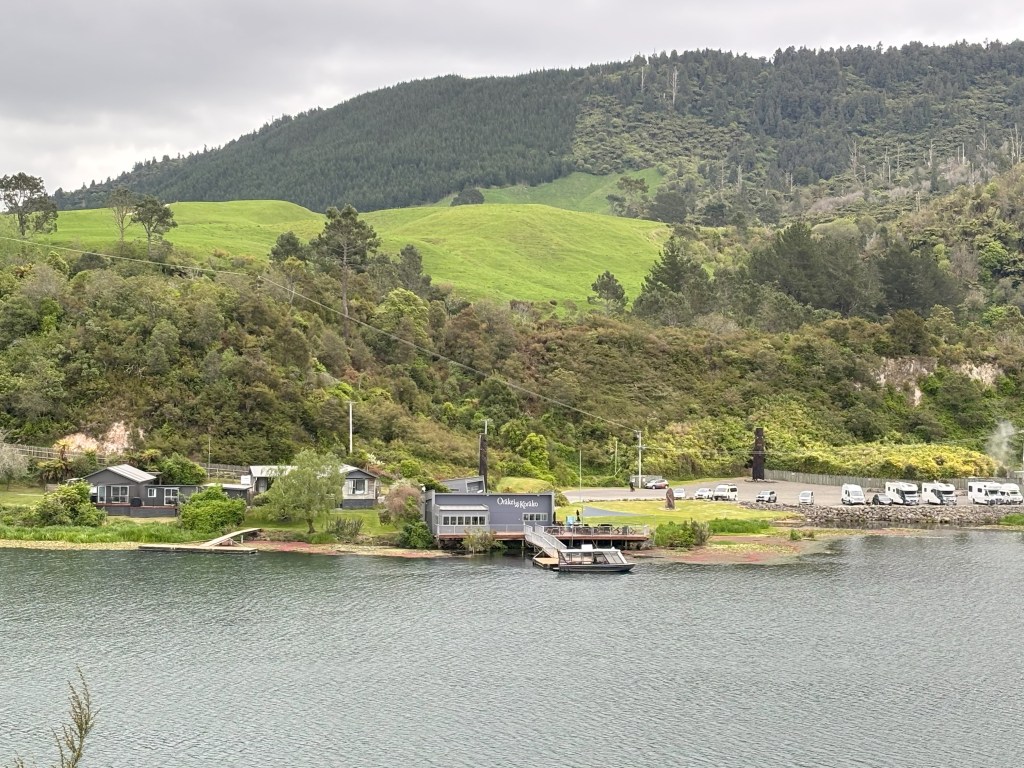
Orakei Korako in Māori, means “place of adorning”. It has been an important settlement on the banks of the Waikato River for the Ngati Tahu-Ngati Whaoa (Māori tribe). The people used the hot springs and geysers for many of their daily activities, such as cooking, bathing and healing. These geothermal activities now play a large traditional role in the iwi’s (tribe’s) culture. Early visitors were welcomed to the area in the 1900’s, with a traditional canoe being used to carry them over the river. Orakei Korako Geothermal Park was then officially opened as a tourist resort in 1937, upgrading from a traditional canoe to a modern ferry.
Just A Boat Ride Away
When we arrived, it didn’t look like much. I could see the rocks across the water with a bit of steam rising, but that was basically all I could see from where I was standing. Trust me though, there was so much more! We bought our tickets, hopped on the ferry, and watched as the geothermal land grew and grew. The driver of the ferry was super nice! He definitely loves what he does for a living, and was so happy to be taking us to a place he was so passionate about. The ferry ride was also pretty fun. I know it doesn’t even compare to what we were about to experience, but I hadn’t been on a boat in a while. So for that moment, I just let the waves flow past me, the wind blow in my hair, and the boat engine bring back very cheerful childhood memories.
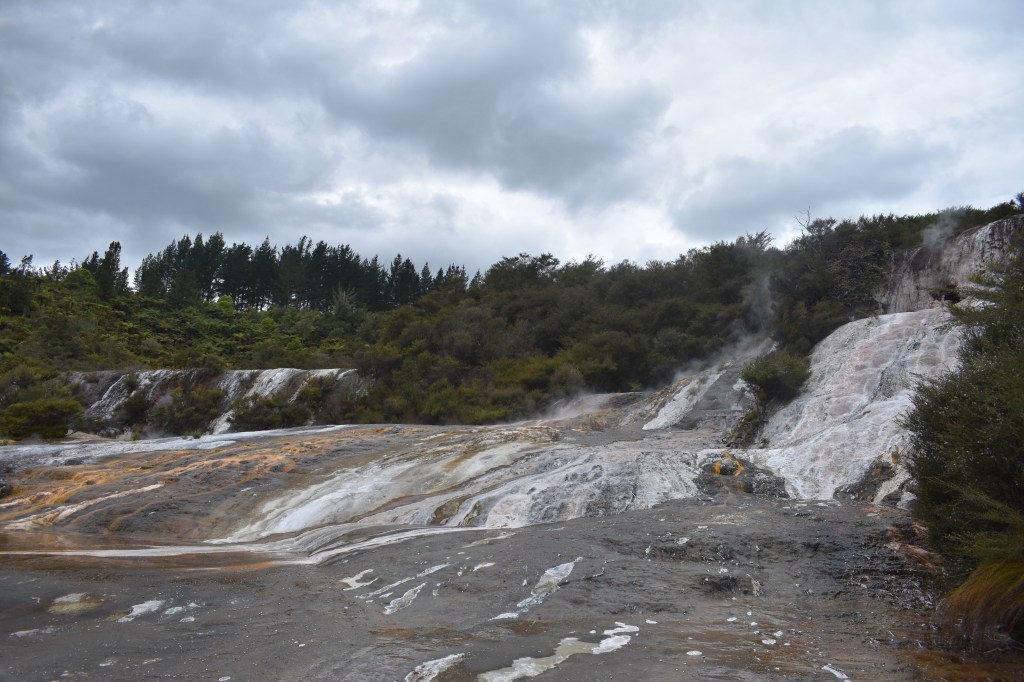
Once we hopped off the ferry on the other side of the river, we were on our own. Well, apart from the other visitors. What I mean is, that the place is self-guided and you can explore at your own pace and interest! We were only walking for a minute or so but I was amazed by what I was seeing. The colour in the silica terraces was like someone had painted all the beautiful orange and bronze watercolours over the landscape. The steam rising from the earth seemed to have its own personality as it danced towards the clouds. And the bubbling hot springs loved the attention as if they were performing an act for any audience wanting to listen to what they had to say. The whole place felt alive!

We kept on walking around to get a better view of the silica sinter terrace, and the formation known as the Artist’s Palette. There’s no wonder why it’s named this with the amount of colour that’s displayed through the rocks. Trust me, the camera doesn’t do any justice to how beautiful this place really was! We also came across one of the area’s mud pools. I don’t know why I enjoy these so much but I had to stand there for a while and just watch the mud bubble and boil. There were mud pools at Te Puia, but these ones seemed to be more active for the smaller size. We got a closer look at some of the hot springs too, which again, were smaller than those at Te Puia but much more active! I guess a smaller amount of water or mud takes less to boil, so it would make sense that these pools are more active at Orakei Korako.
Rich In Māori Legend
Further along, we became more familiar with the Māori culture and the history of the land. Like one of the sinter formations, Elephant rock. This rock formation is actually an active fumarole, an opening near a volcano that releases hot sulphurous gas. But in Māori legend, it’s a reminder of the monster Te Ika o Hotopuku a Taniwha who lived in a cave downstream. Another beautiful sight at Orakei Korako was Ruatapu Cave, also known as Aladdin’s Cave. There are 2 theories as to how this cave was formed, one being that it is a hydrothermal eruption crater, where the pressure from steam and heat became too much for the softer type of rock that it erupted, causing the crater. Another theory, and the more likely of the two is that Ruatapu Cave is formed by dissolution. This is when corrosive liquids, like acidic steam from a fumarole, leak into joints and fractures of the rock and dissolve it. After a while of this process, the rock collapses, forming a cave much like Ruatapu Cave.
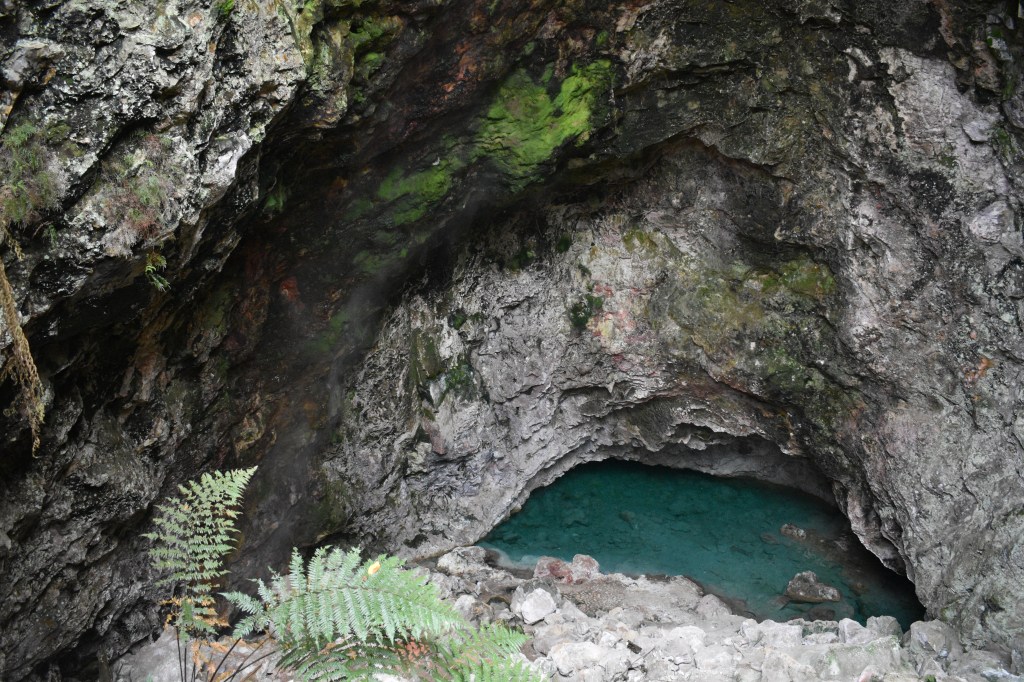
After a while of looking down into the beautiful pools of Ruatapu Cave, we kept walking to get a higher view of Orakei Korako as a farewell to the area before catching the ferry back. I can’t stress enough how stunningly colourful the place was. If there was one place I could visit for the rest of my life, this is it. I don’t care if I’ve visited before, I’ll definitely be visiting again next time I go to New Zealand. Because this place feels more than just a holiday attraction. It’s almost spiritual, even for someone who isn’t descended from Māori culture. The place felt alive. And I’m so happy I got to experience it while I was there!
All photos in this post were taken by me.
For more information on Orakei Korako Geothermal Park, visit https://www.orakeikorako.co.nz/

 The Travel Journal
Leave a comment