Disclosure: The following post contains the history of a volcanic eruption and its effects on a nearby village, which some may find distressing.
Everyone’s heard of Pompeii; the disastrous volcanic eruption that left a city full of people covered in ash to live their last moments forever. But have you heard of a similar event in New Zealand’s Rotorua, where a whole village was buried after a volcanic eruption? Neither had I until we went exploring for the day. Join me as I learn more about New Zealand’s darker history.

The “Buried Village” was originally known as Te Wairoa, a tourist attraction for geothermal springs. This was also the place of the world’s largest silica sinter deposits, the Pink and White Terraces, where tourists would bathe in the naturally heated water. In June 1886, Mount Tarawera erupted, causing Lake Rotomahana to explode with it, burying Te Wairoa in mud 2 metres thick. Over 150 people died from the volcanic eruption, either from falling debris, asphyxiation, or being buried under the volcanic material. Almost 50 years later, a stone storeroom was uncovered, and the Buried Village attraction began its development, with a museum opening for all the artifacts and relics that had been found in the area. What was once lost can now tell a story for one of New Zealand’s most visited historical sites.
Once we bought our tickets, the first part of the Buried Village was the museum space telling the history before and after the eruption, and showcasing all the items that were discovered along, with the buildings outside. This was a very heavy scene to walk through. Everything that was found was once lost in the terrifying eruption which had taken so many lives. Some of these treasures would have held great value to the people of Te Wairoa as well. A lot of the surviving items were glass bottles or tools, but there were also some lovely blue china amongst the collection; tableware you would only bring out at special occasions. It’s really sad how all of this was left behind after such a scene.
The Buried Village Museum also showcases the stories of people who were there when Mount Tarawera erupted. One of these stories comes from a guide who would take tourist parties across Lake Tarawera to the Pink and White Terraces; Sophia Grey. Her real name was Te Paea Hinerangi, being the daughter of a Maori woman (Hinerangi) and a Scottish man (Alexander Grey), but everyone knew her as guide Sophia. In Sophia’s story, she writes about taking a party out on a canoe and noticing the lake’s water being much higher than usual. She noticed a phantom canoe which only made her unease grow even more. That night, Mount Tarawera erupted and Sophia took shelter in her whare (a simple Maori house) and welcomed anyone who was seeking cover from the volcanic debris. In her writing, she mentioned not knowing what had made her bring in garden tools with her that night, but lucky for her they were exactly what she needed to dig her and those who sought shelter alongside her out of the whare. These stories bring about the power of survival in such a terrifying disaster. If it weren’t for Sophia, more people of Te Wairoa would’ve died. And we wouldn’t have these first-hand stories of the eruption of Mount Tarawera.
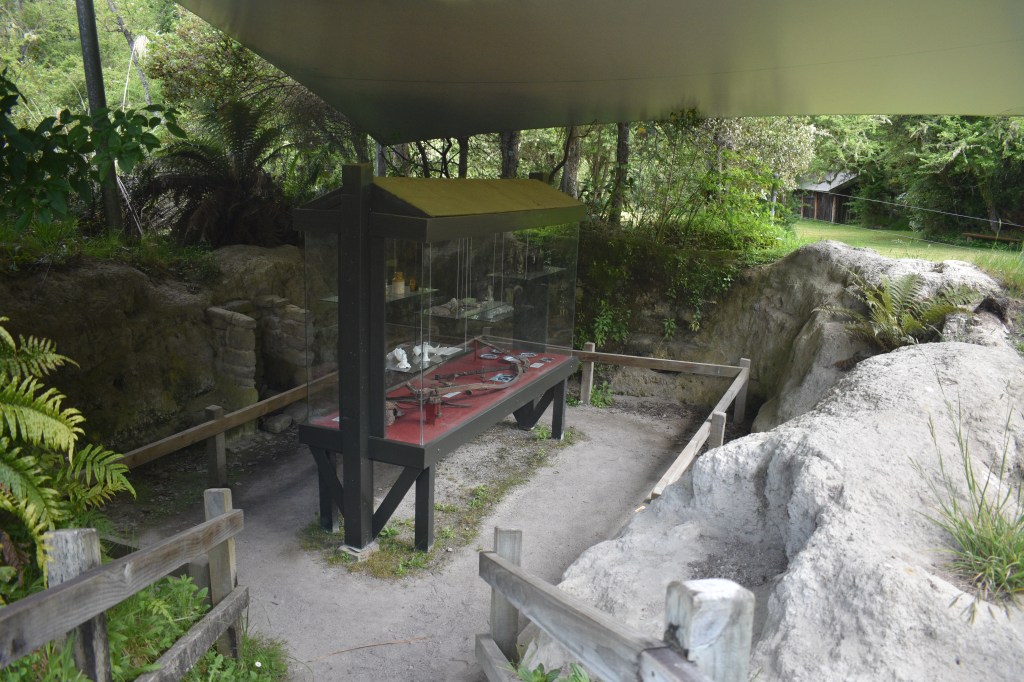
After reading the stories of those who were involved in the eruption, we followed the path down to the archaeological site of the Buried Village. As I mentioned before, the volcanic eruption caused two metres of mud from Lake Tarawera to fall upon the surrounding area. Buildings and houses were covered. They had to be dug out to reveal the true story of those living during the time of the eruption. Of those buildings that were excavated, they displayed objects that were also found within the site. Plates, bottles, pots, even horseshoes and old tools were all collected, allowing anyone visiting the Buried Village to gain a deeper perspective into the lives of the people. This also allowed us to grow a connection with those who lived during the time, seeing these everyday belongings once lost, now a treasured memorial to those who perished.
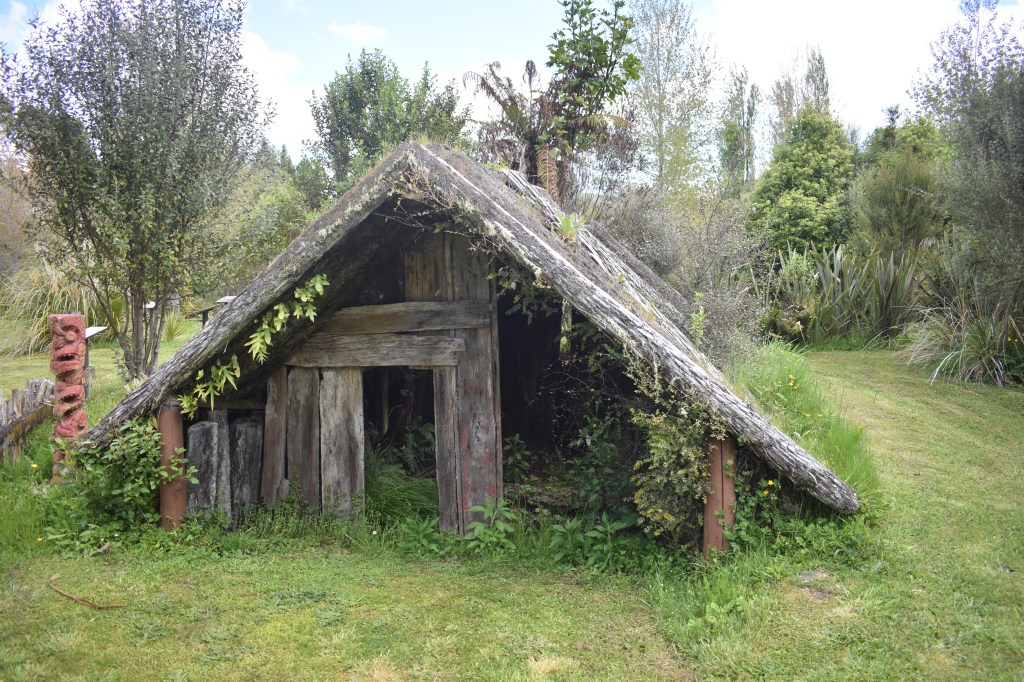
You could walk down into most of the working sheds to view the items that were found there, but there was also one of the houses you could step down to as well. All of the buildings were very simple in their construction. Mostly made out of wood and grass, they had an old small-town charm to them. Honestly, if I was still really into art, I would’ve loved to just sit and paint here. I know this is where disaster struck, but the place still looked so beautiful. When we walked down into one of the village houses, we were amazed at how a family could live in such a small building. It was probably smaller than my bedroom! I guess this is just a reminder that we take so much for granted nowadays.
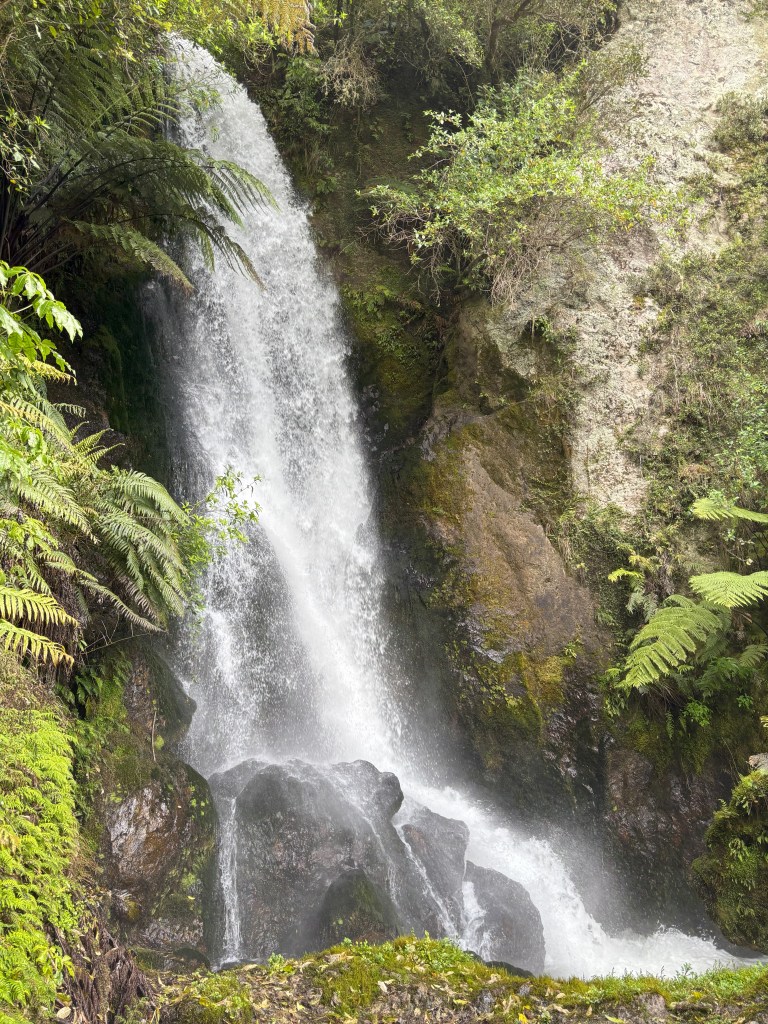
With New Zealand being such a beautiful place, the Buried Village also resides near the Te Wairoa Falls. So, we continued walking until we were immersed in trees, ferns and moss. Everywhere you looked was bright green as if we had stepped into a fairytale setting, the complete opposite of where we had just been mere minutes ago. Down a few steps and there it was, the rushing falls of Te Wairoa. It was a beautiful sight, and definitely lifted our spirits a little after seeing all the devastation that Mount Tarawera had caused. Once we were finished admiring the beauty of the area and the history of the Buried Village, we also travelled a short drive to a lookout point of Mount Tarawera. Seeing it in person was a little eerie. It hasn’t erupted since 1886, but it is still considered an active volcano. And considering all the damage it caused for the people of Te Wairoa, it’s an entity that shouldn’t be underestimated.
I learnt a lot from the Buried Village. Not just about the history and the science behind Mount Tarawera and the village of Te Wairoa, but also about the human spirit and respect we have, or should have for one another. I’ve been to a lot of places that display natural disasters and human suffering, but none of them have made me feel as deeply as this one did. I can be a very empathetic person, and the Buried Village really pushed my limits for this. But I’m so glad I visited, and I truly recommend it to those who can handle the emotions it causes. It changed my perspective on life, and for that I am thankful.

 The Travel Journal
Leave a comment