If you’ve never heard of him before, Sir William Dobell was a famous artist of the 20th century. He won multiple prizes and awards for his paintings and was eventually knighted at Government House for his talents. His art took him around the world, but his house in Wangi Wangi is preserved in its original state, becoming a museum for his personal and work life.
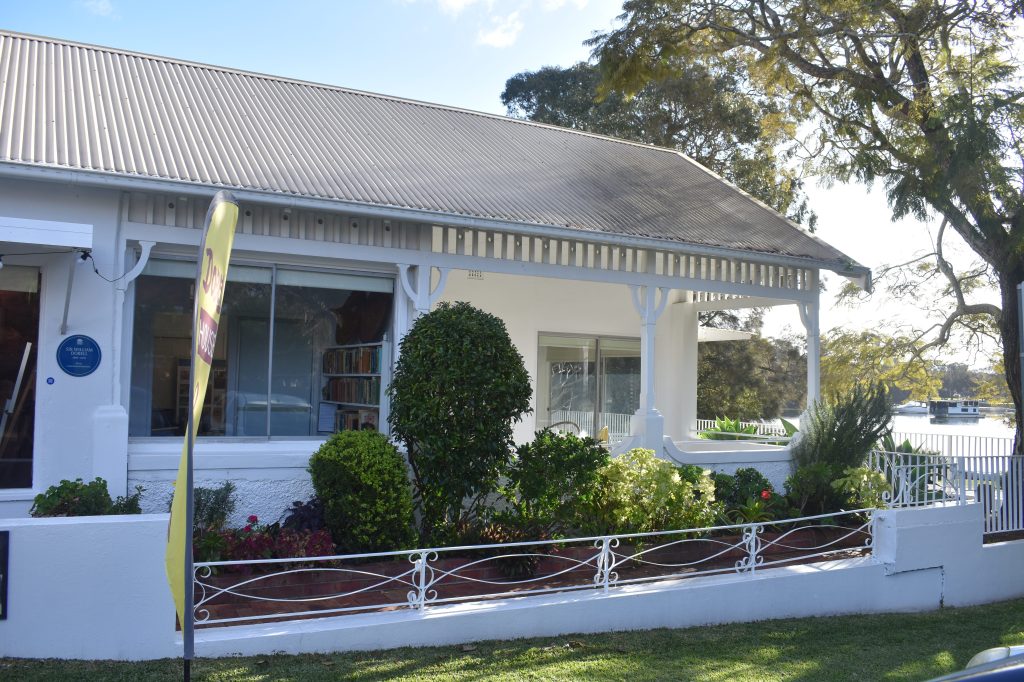
Wangi Wangi is a small town in Lake Macquarie, named after the Awabakal meaning of “water water”, as it is surrounded by the lake on both sides. The community is very close; everyone knows everyone in Wangi. And because of how small the town is, I wouldn’t have expected Dobell House to be so “museumy” for lack of a better word. I’ve travelled past it many times, and from the outside, it just looks like a normal, old house. But once you step inside, you realise all the effort it must have taken for the people to keep such a monument preserved in its original state when Dobell lived there. The house is run by volunteers who are super helpful and extraordinarily nice! We were welcomed in with a story of Dobell’s life before exploring the house on our own, with the answers to any questions we had. There really is a certain charm to such museums in small towns. If you have any queries, all you have to do is ask!

The house was a great snapshot into the life of William Dobell. There were banners displayed to tell the artist’s life; from growing up in Cooks Hill, moving to Sydney for school, travelling around England for his art, and returning to Australia when his father was ill. Apart from these banners, the house was filled with the original furniture, layout, and mannequins of Dobell’s clothes. I could tell what kind of personality he was just from the outfits on display, and I think this was a brilliant touch. It also allowed us to be immersed in the era of Sir William Dobell, living between the 1900s to the 1970s.
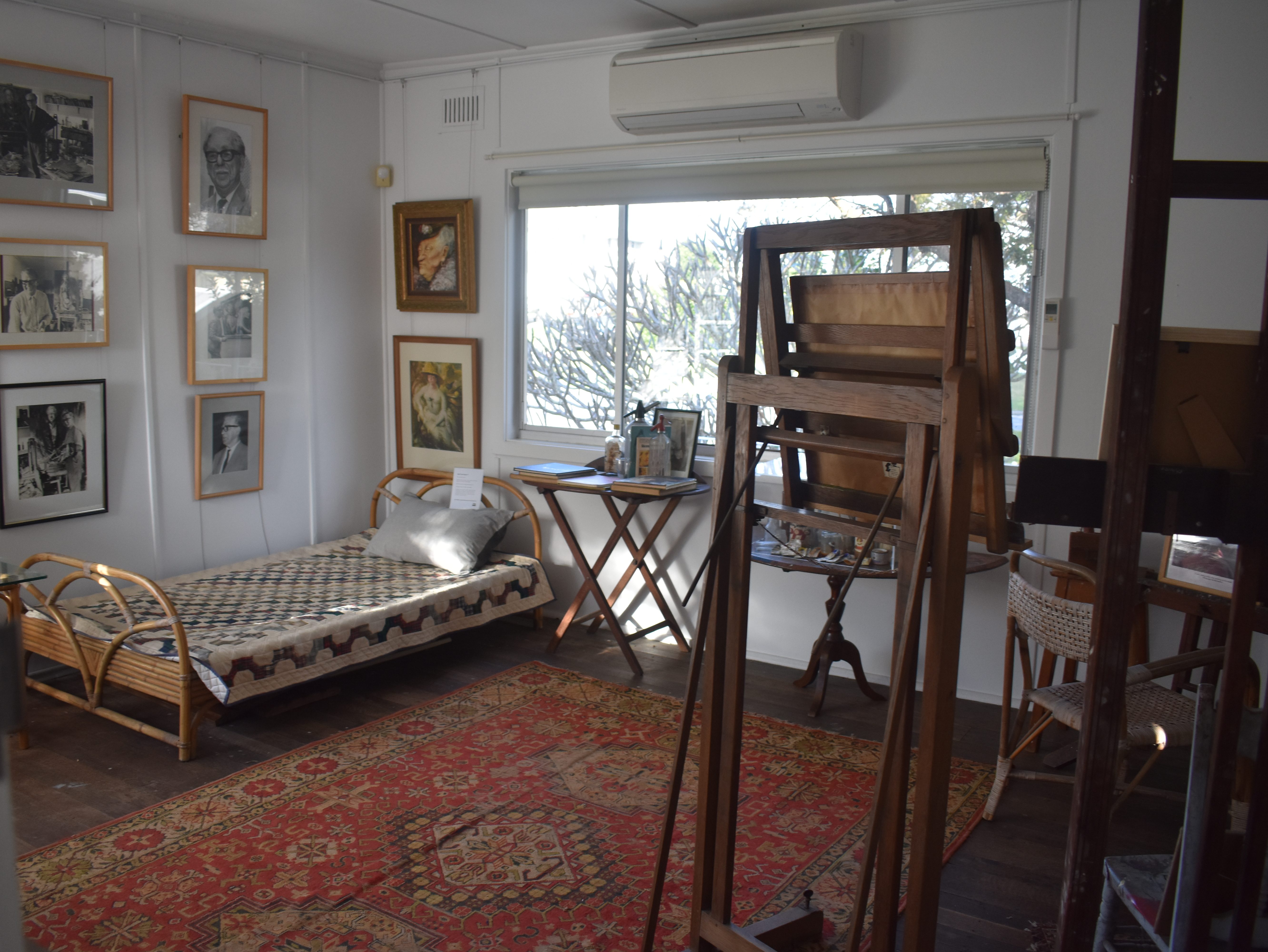
The upstairs studio of the house is probably one of the most important rooms. But be warned, the stairs are STEEP. One of the volunteers told us that Dobell designed them in this way so that his sister would not disturb him while he was painting. This just adds even more character to the building, but these days, the stairs would not meet regulations. The studio is arranged with Dobell’s easel, desk and original paints and brushes. It also has photos of him working up in his studio and the paintings that were created there. It’s so crazy to be standing in the room where the famous painter would create some of his amazing artworks, as if you’re stepping into his life.
One of my favourite parts of the house was the stories behind Dobell’s paintings. One of his most famous paintings is the portrait of Joshua Smith, which won him the Archibald Prize in 1943. Dobell was taken to court because of this, with other artists claiming it was a caricature because of Dobell’s art style, as the Archibald Prize is awarded for portraits only. This was however overruled. Another story I found very interesting was from his paintings of the Wangi shore, including “Storm approaching Wangi”. Dobell worked on these artworks and sketches when he had first arrived in Wangi, being ill and stressed, so much so that he had lost the energy to paint. But while staying here, he began to take in the scenery and found so much beauty in the landscape that it inspired his artistic skills once more.

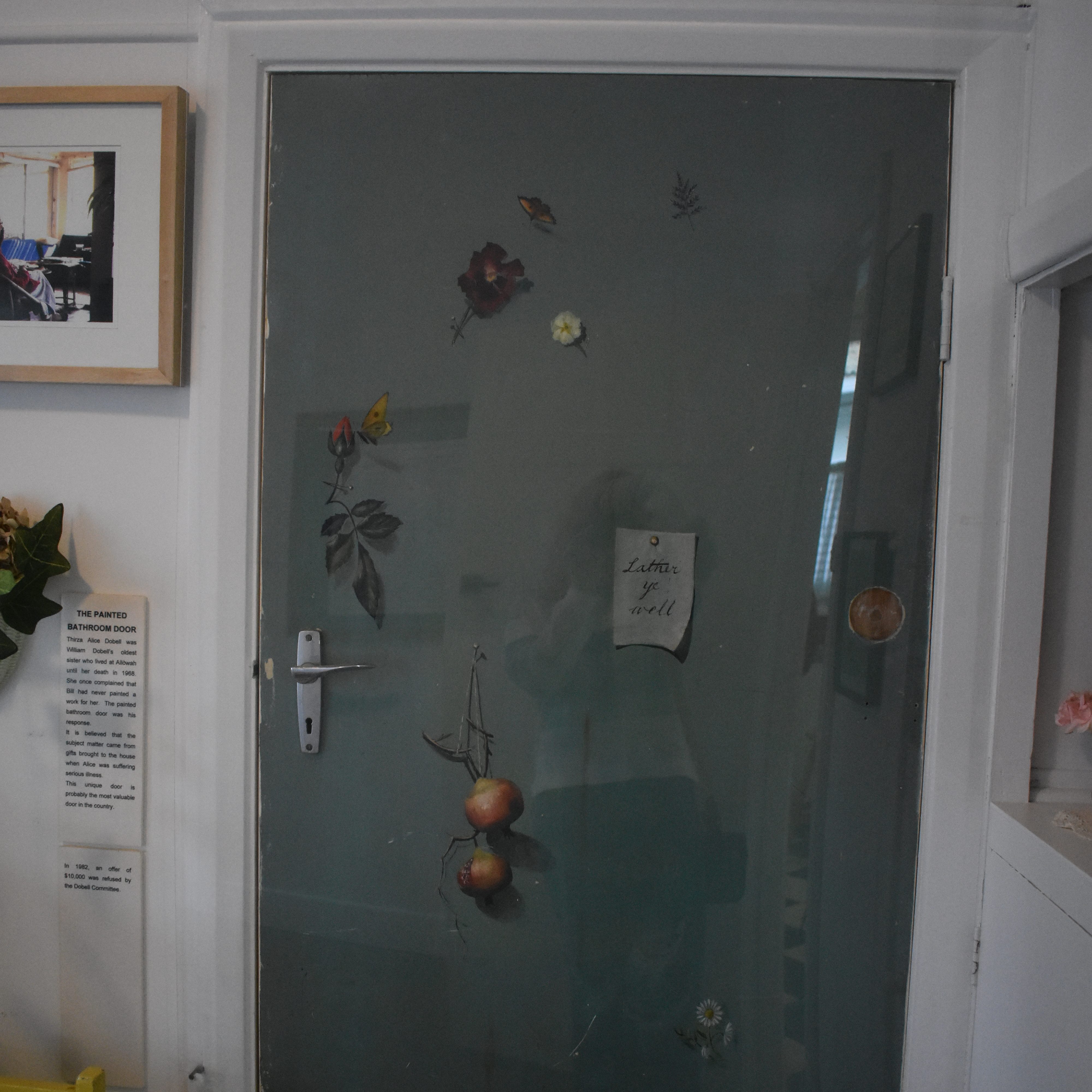
We were also told a beautiful story in William’s sister’s bedroom. This room was probably the most comforting for me, and transported me back to the time of the house. But this story comes from one of the doors in the room. See, Dobell’s sister told him that he was always painting for other people, but never her. So that’s what he did. Our guide told us that this door is the only original art piece at Dobell House, hence why it is so interesting. This just gives us another snapshot of Dobell’s personality, bringing his memory and the house to life. Without these stories from the volunteers, Dobell House would be just that, a house.
Dobell House also offers souvenirs and keepsakes for your visits, which go towards keeping the memory of William Dobell alive. I bought a small print of one of his paintings so that I could remember my visit, and support the work the volunteers are trying to achieve. I think it’s so important that these exhibits are preserved, for their memory, as well as the future’s. It may just be a house, but it tells the story of the local hero Sir William Dobell.
All photos in this post were taken by me.
For more information about the life of William Dobell and Dobell House, visit https://www.dobellhouse.org.au/

 The Travel Journal
Leave a comment